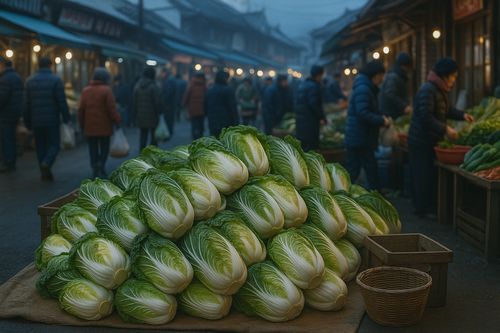
Many Koreans say the most delicious kimchi is winter kimchi (called gimjang kimchi), traditionally made in November. That’s when napa cabbage is at its peak — sweet, dense, and full of flavor thanks to the cool autumn climate. While cabbage is now harvested year-round, the late autumn crop offers superior sweetness and texture.
What makes this season so perfect?
Sun-dried red chili flakes are fresh from harvest
Garlic and ginger are still fragrant and recently picked
All key ingredients reach their maximum aroma and taste
In short, gimjang season is when all elements come together to create the most flavorful, balanced kimchi.
🧪 The Peak of Fermentation (and Flavor)
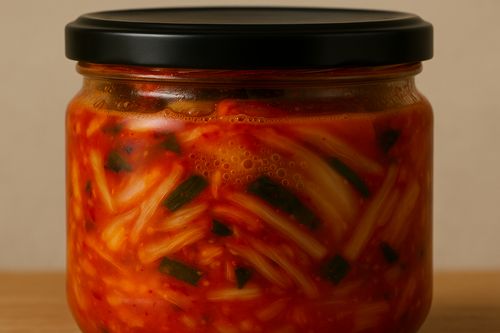
Kimchi doesn’t taste its best immediately. It usually takes about 3 weeks at 4–5°C (39–41°F) to fully ferment.
At this stage:
Lactic acid bacteria have multiplied to over 100 million per gram
Acidity reaches about pH 4.2, with 0.6–0.8% lactic acid
The flavor is balanced: slightly sour, slightly sweet, crisp, and clean
This is when kimchi is both the tastiest and most nutritious.
🧬 What Happens After That?
As fermentation continues:
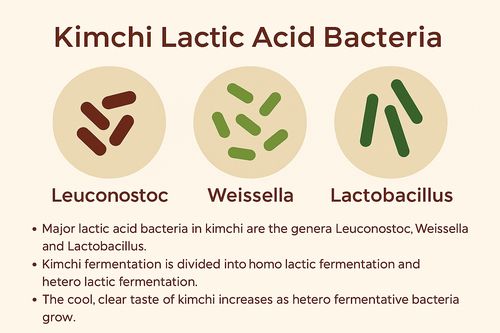
Early-stage bacteria like Leuconostoc decrease
Lactobacillus (acid-tolerant strains) increase
The flavor turns sour, and lactic acid can over-accumulate
Eventually, excess acidity may harm even the good bacteria
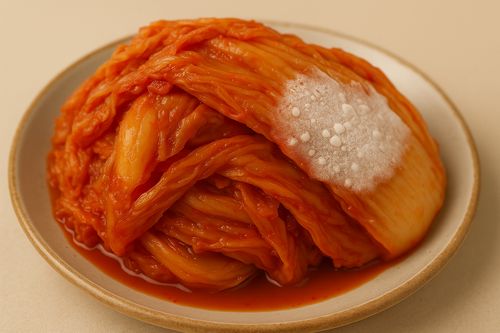
In the final stage, white film (golmaji) can form — often mistaken for mold, but it’s actually a harmless yeast reaction to oxygen.
🔬 The Beneficial Bacteria in Kimchi
Kimchi’s unique fermentation involves several major bacterial strains: